By Mon Rahman
Bangladesh is often viewed merely as a densely populated developing nation. However, a closer look at global economics, trade, and geopolitics reveals a very different picture. Located at the crossroads of South Asia and Southeast Asia, blessed with vast maritime resources in the Bay of Bengal, expanding infrastructure, export-oriented industries, a youthful workforce, and growing regional connectivity, Bangladesh is increasingly being recognized as one of the world’s most promising emerging economies. Experts, however, believe that turning this potential into reality will require deep economic reforms, skilled human resources, good governance, and a more investment-friendly environment.
According to the World Bank, Bangladesh’s Gross Domestic Product (GDP) reached approximately US$456 billion in 2025, while GDP per capita stood at around US$2,597. The country’s population is estimated at 175.7 million. Despite its large population, Bangladesh maintains a relatively low unemployment rate of around 3.8 percent, reflecting its growing labor market.
One of Bangladesh’s greatest strengths in the global economy is its strategic geographic location. The country is bordered by the Bay of Bengal to the south, India to the west and north, and both India and Myanmar to the east. This unique position places Bangladesh at the heart of South Asia while offering direct maritime access for Nepal, Bhutan, and India’s northeastern states. Economists believe that if fully utilized, this strategic location could transform Bangladesh into a regional logistics and manufacturing hub.
Another invaluable asset is the Bay of Bengal. Following international maritime boundary settlements, Bangladesh secured sovereign rights over approximately 118,813 square kilometers of maritime territory. This vast area offers enormous opportunities in fisheries, natural gas exploration, marine minerals, renewable energy, and the rapidly emerging blue economy. Researchers believe that the blue economy could become one of the country’s major growth drivers in the coming decades.
The country’s export sector remains another pillar of economic growth. Bangladesh is now one of the world’s largest exporters of ready-made garments (RMG), supplying apparel to the European Union, the United States, Canada, Japan, and more than a hundred other countries. The industry employs millions of workers and continues to be the backbone of Bangladesh’s export earnings. The World Bank notes that exports have recently regained strong momentum, helping stabilize the national economy.
Remittances also play a crucial role in Bangladesh’s economic development. Millions of Bangladeshi workers living across the Middle East, Europe, North America, and Asia send billions of dollars home each year. According to the World Bank, personal remittances account for approximately 6.1 percent of the country’s GDP, strengthening foreign exchange reserves, boosting household consumption, and supporting rural economies.
Experts also identify Bangladesh’s demographic dividend as one of its greatest opportunities. A significant proportion of the population is of working age. If equipped with quality education, technical skills, and vocational training, this workforce could substantially increase productivity over the next two decades.
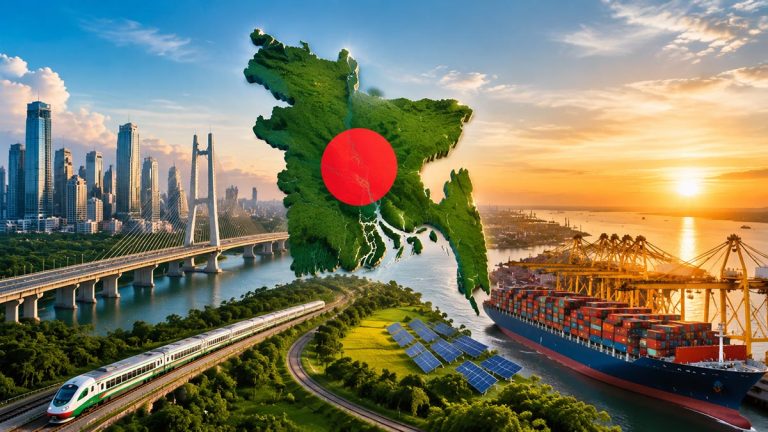
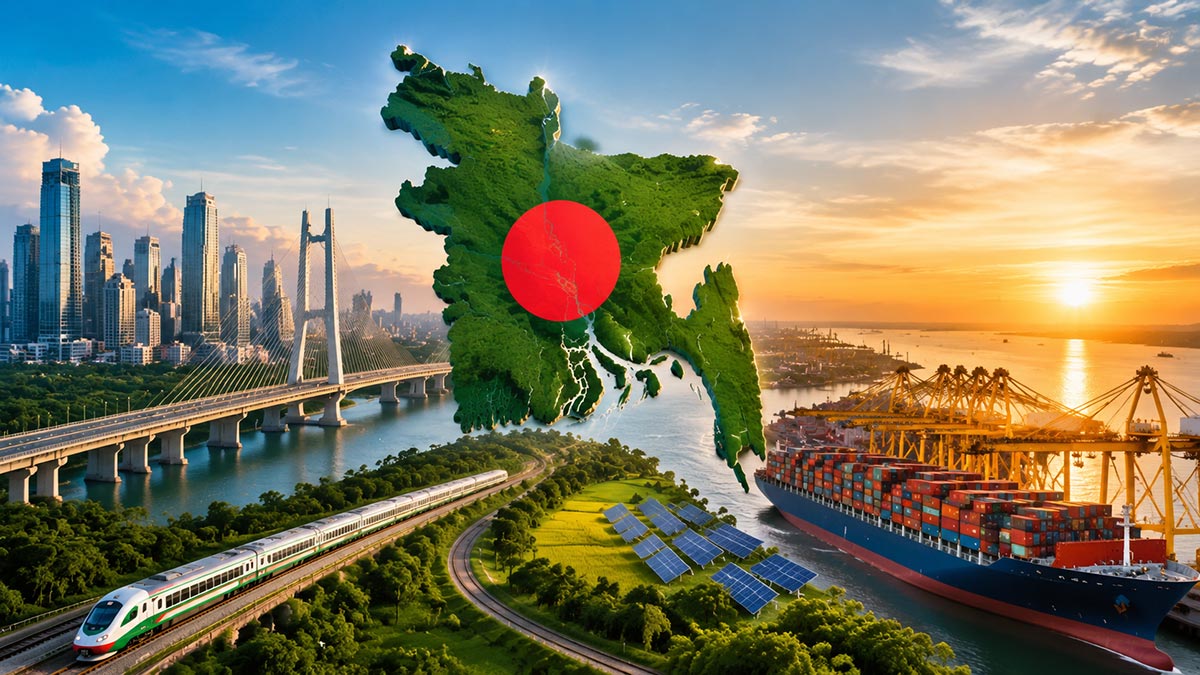
Over the past decade, Bangladesh has witnessed remarkable improvements in infrastructure development. The Padma Bridge has significantly accelerated economic activity in the country’s southwestern region. Meanwhile, the Matarbari Deep Sea Port, expansion of Chattogram Port, and the Bay Terminal project are expected to further strengthen Bangladesh’s position in international trade. According to the World Bank, the Bay Terminal alone could eventually handle nearly 36 percent of the country’s container traffic, reducing transportation costs and vessel waiting times.
Regional connectivity initiatives are also creating new opportunities. Projects under BBIN (Bangladesh, Bhutan, India, Nepal) and BIMSTEC could position Bangladesh as a major transit and trade hub in South Asia. Economists argue that the country’s geographical advantage alone has the potential to generate significant revenue from logistics and transportation services.
Bangladesh is also preparing for its graduation from the Least Developed Country (LDC) category to a developing nation. While this transition reflects the country’s remarkable economic progress, it also presents challenges, including the gradual loss of certain duty-free trade privileges. Experts therefore emphasize the importance of diversifying exports, promoting high-value manufacturing, and expanding technology-driven industries.
Despite its achievements, Bangladesh still faces considerable challenges. Both the World Bank and the International Monetary Fund (IMF) have highlighted persistent issues such as high inflation, weaknesses in the banking sector, a low tax-to-GDP ratio, sluggish investment, and the need for comprehensive financial sector reforms. Long-term sustainable growth, they argue, will depend on increasing domestic revenue, strengthening institutions, improving the business climate, and developing a highly skilled workforce.
In its latest assessment, the World Bank stated that timely economic reforms could help Bangladesh regain a higher growth trajectory. The institution also stressed the importance of creating more jobs, increasing women’s participation in the labor force, and encouraging productive investment.
Economists further point out that future global competitiveness will no longer depend solely on low labor costs. Instead, artificial intelligence, semiconductors, green energy, digital services, advanced manufacturing, and innovation will shape tomorrow’s economies. If Bangladesh invests strategically in education, research, technology, and human capital, it can secure a stronger position in the global marketplace.
Another promising avenue is renewable energy and climate finance. As one of the countries most vulnerable to climate change, Bangladesh is well-positioned to benefit from international climate funds, green technologies, and sustainable infrastructure investments aimed at building climate resilience.
Overall, Bangladesh stands at a pivotal moment in its development journey. Its strategic geography, maritime resources, youthful population, export-driven economy, expanding infrastructure, and regional connectivity provide a strong foundation for future prosperity. Yet realizing the dream of becoming a developed nation will require more than just potential. It will demand visionary leadership, effective policies, institutional reforms, and sustained investment in people and innovation.
As many experts observe, Bangladesh’s greatest asset is its strategic geographic location, while its greatest challenge lies in transforming that potential into lasting prosperity.
About the Author